
When you are working underground, inside a tunnel or within a confined space, getting clean breathable air to your crew is not optional. It is a legal requirement and a fundamental safety obligation. For decades, electric fans have been the standard choice on most construction and mining sites. But as projects push deeper underground and into more hazardous environments, pneumatic axial fans are becoming the preferred industrial ventilation solution for good reason.
In this article we look at why pneumatic fans are gaining ground across Australian mining, tunnelling and civil infrastructure projects, and how they solve problems that electric alternatives simply cannot.
What Is a Pneumatic Fan?
A pneumatic fan is an air moving device powered entirely by compressed air rather than electricity. Instead of an electric motor spinning the fan blades, a pneumatic motor converts the energy from a compressed air supply into rotational force. The result is a fan that delivers high volumes of airflow without a single electrical component at the point of operation, effectively an explosion proof motor by design rather than by add-on certification.
This distinction matters enormously in environments where sparks, electrical faults or heat from a motor could trigger an explosion, a fire or a safety incident.
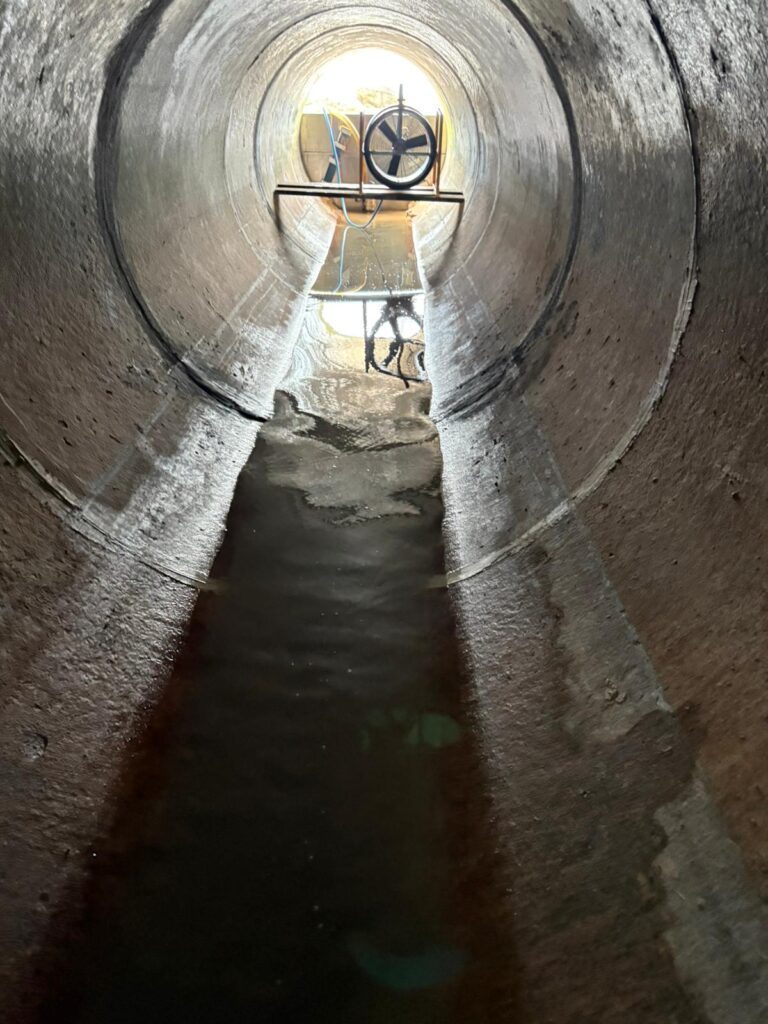
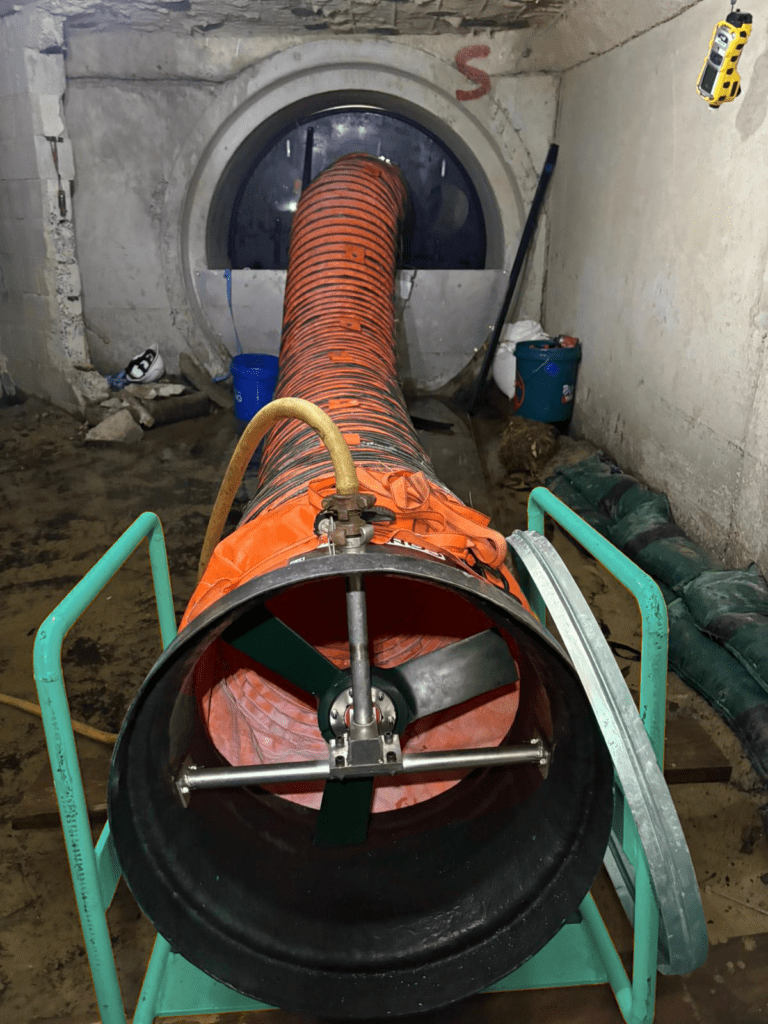
No Ignition Risk in Hazardous Atmospheres: The Explosion Proof Fan Advantage
The single biggest advantage of pneumatic fans is the elimination of electrical ignition sources. In underground mining, tunnelling and many industrial settings, flammable gases, explosive gas, combustible dust or volatile organic compounds can be present in the atmosphere. Methane in coal mines, fuel vapours in tunnelling works and solvent fumes in industrial plants are all common hazards.
An electric motor, no matter how well protected, carries some inherent risk of producing a spark. Pneumatic motors do not. Because they run on compressed air alone, there is no electrical current, no wiring and no switching components anywhere near the fan. This makes pneumatic fans the safest choice for proper ventilation in hazardous environments.
For operations that fall under Australian Standards for hazardous areas, choosing a pneumatic fan removes an entire category of risk from the ventilation system. More broadly, an explosion proof fan or explosion proof exhaust fan is typically certified to standards such as ATEX or IECEx for use where hazardous gases are present. Control Hire’s own pneumatic fan range holds a different but equally recognised set of certifications for hazardous underground use, covered below.
Built for the Toughest Environments
Underground worksites are brutal on equipment. Fans get knocked around, exposed to moisture, coated in dust and subjected to corrosive conditions daily. Pneumatic fans are purpose built for this.
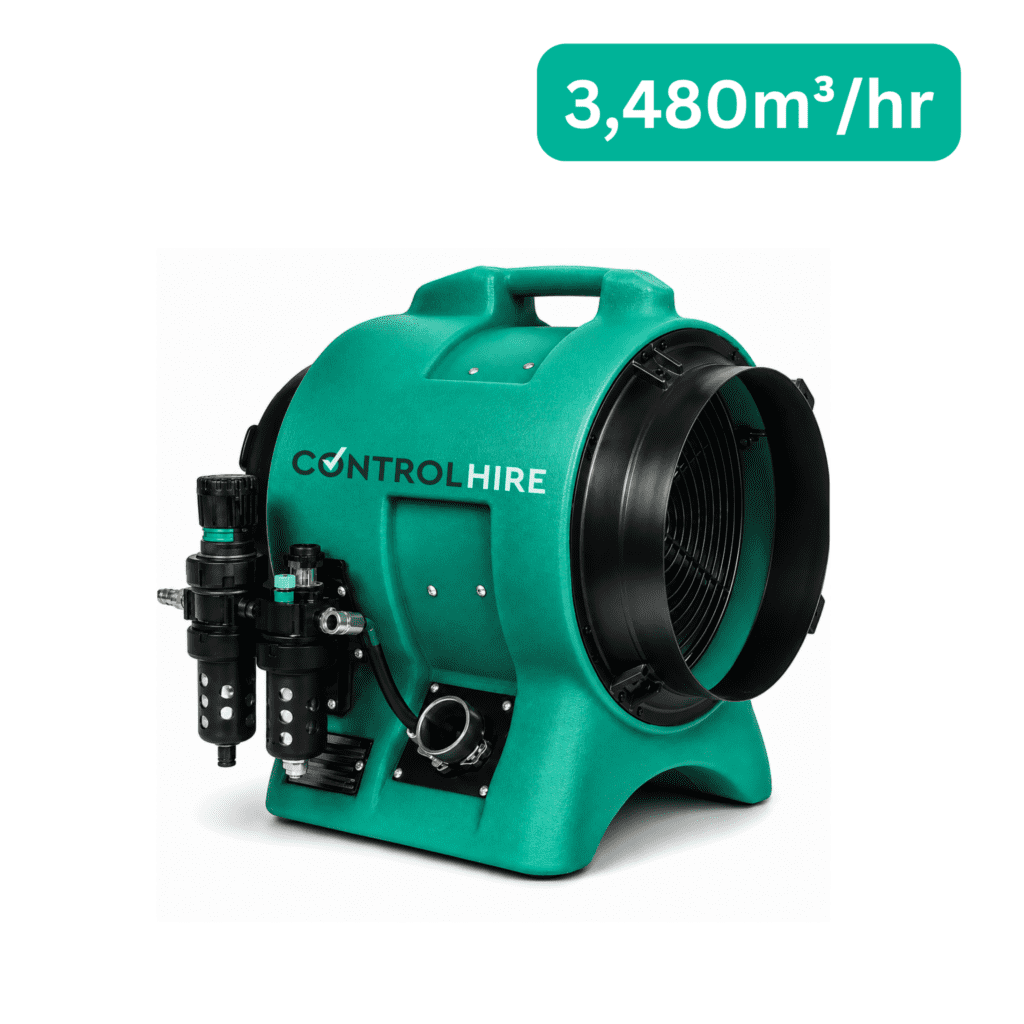
Take Control Hire’s 300mm Pneumatic Axial Fan as an example, a genuinely portable explosion proof fan rather than a fixed installation. It features a dual wall shell made from impact resistant high density polyethylene that protects the internal chamber from knocks and drops. All metal components are epoxy coated to prevent corrosion. At just 15 kg, it is light enough for one person to carry into a confined space, yet tough enough to handle the conditions once it gets there.
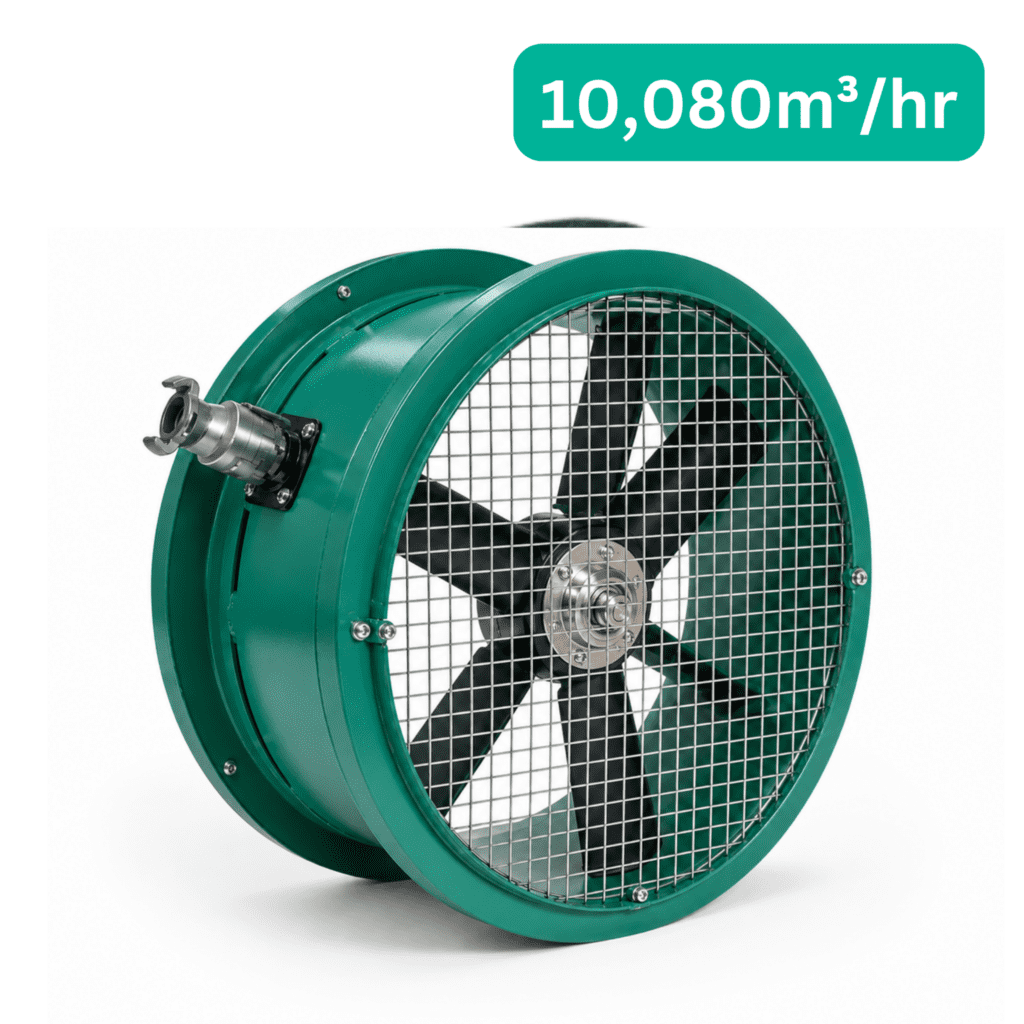
The 500mm Pneumatic Axial Fan takes durability further with a Fire Resistant Anti Static (FRAS) fibreglass construction. FRAS materials are a requirement in many underground mining environments because they will not ignite or generate static charge. At only 12 kg, the 500mm model is actually lighter than the smaller 300mm unit while delivering significantly more airflow at 2.8 m³/sec.
For larger applications, the 600mm Pneumatic Axial Fan provides a bigger diameter option with the same dual wall polyethylene construction, epoxy coated metal components and UL Listed certification as the 300mm model. Its 1.5 HP pneumatic motor delivers up to 2,063 CFM of free air and supports up to 40 metres of ducting.
No Electrical Infrastructure Required at the Face
One of the practical challenges on tunnelling and underground projects is getting power to the working face. Electrical supply at the face can be limited, and running cables through wet, muddy and confined environments is expensive, time consuming and creates additional trip and fault hazards. Every cable run needs to be inspected, maintained and protected.
Pneumatic fans sidestep this entirely. Most underground and tunnelling operations already have a compressed air supply running to the face for pneumatic drills, bolters and other tools. Connecting a pneumatic fan to that existing air supply is fast and straightforward. There is no need for dedicated power circuits, distribution boards, residual current devices or electrical isolation procedures at the point of ventilation.
This means ventilation can be set up faster after each advance, reducing the downtime between blasting or excavation cycles and the resumption of safe working conditions.
Ideal for Confined Space Ventilation Work
Confined space entry is one of the most regulated and hazardous activities on any worksite. The atmosphere inside a confined space can change rapidly, and having reliable ventilation running before and during entry is critical. Normal air contains about 20.9% oxygen, and levels below 19.5% are considered oxygen-deficient. Industry guidance such as ANSI Z117.1 recommends around 20 air changes per hour as the standard benchmark when planning mechanical ventilation for confined spaces, so airflow output should be sized to that requirement, not a lower figure.
Pneumatic fans are ideal for this application because they introduce no additional hazards into the space. There is no risk of electrical fault in a wet or flooded environment. There is no motor heat that could affect the atmosphere. And the fan itself produces no exhaust gases, unlike petrol or diesel powered alternatives, making it easier to maintain contaminated air control and effective ventilation throughout entry.
The compact size of models like Control Hire’s 300mm pneumatic fan makes it easy to position at the entry point of a tank, pit, chamber or pipe. Its ability to run in both positive (supply) and negative (extraction) configurations means the unit can function as both a blower and an explosion proof exhaust fan, circulating fresh air in or pulling contaminated air out depending on the ventilation plan.
Variable Airflow Without Complex Controls
Pneumatic fans offer a simple and effective method of airflow control, with performance also affected by duct length, bends and static pressure losses. By adjusting the compressed air supply pressure, operators can increase or decrease fan speed and airflow output without any electronic speed controllers, variable frequency drives or complex wiring.
The 500mm Pneumatic Axial Fan from Control Hire delivers airflow proportional to the supply pressure, giving site teams the ability to fine tune ventilation to match the conditions. This is particularly useful in situations where airflow needs change throughout a shift, such as during welding, when welding fumes need to be cleared quickly, or during shotcrete application or chemical use in confined areas.
Compliance with Mining Regulations
In Australian underground mining, ventilation equipment must comply with specific regulatory requirements. The 500mm Pneumatic Axial Fan in Control Hire’s range holds Mines Department Approval (MDA910091 and 910091/A) and complies with MDG No.37, the guideline for the safe use of fans in underground coal mines.
Both the 300mm and 600mm models carry UL Listed (cULus) certification, providing an internationally recognised safety standard that gives project managers and safety officers confidence in the equipment’s suitability for hazardous locations.
Lightweight and Portable
Weight matters underground. Every piece of equipment needs to be transported through shafts, along drives and into tight working areas. Heavy or bulky fans create manual handling risks and slow down crew movements.
The entire Control Hire pneumatic fan range is designed with portability in mind. The 500mm FRAS model weighs just 12 kg. The 300mm and 600mm models weigh 15 kg each. These are fans that a single worker can carry to where they are needed without assistance, which makes setup faster and reduces the risk of manual handling injuries.
The 300mm and 600mm models also feature interlocking ribs that allow vertical stacking for compact storage and transport, which is a practical detail that makes a real difference when space is tight in a site compound or on a transport vehicle.
Ducting Compatibility
Effective underground ventilation relies on flexible ducting to direct airflow where it is needed and help capture contaminants at the source. All three pneumatic fans in Control Hire’s range are compatible with flexible ventilation ducting systems, and anti-static ducting may be required where flammable vapours or gases are present. The 300mm and 600mm models feature solid hose flanges that support up to 40 metres of ducting, enabling ventilation to reach deep into excavations, tunnels and shafts from a single fan position.
This ducting reach combined with the ability to run in both positive and negative pressure configurations gives ventilation engineers flexibility in designing systems that comply with site ventilation plans and regulatory requirements.
Common Applications
Pneumatic fans are used across a wide range of industries and project types in Australia. Common applications include underground mining and shaft sinking, tunnel boring machine support ventilation, confined space entry in tanks, pits and pipelines, civil infrastructure projects such as underpasses and cut and cover tunnels, fume extraction after blasting, welding fume control in enclosed areas, temporary ventilation during shotcrete and concrete works, spot cooling for crews working in high temperature environments, and drying or evaporation support in wet underground conditions.
Why Hire Rather Than Buy?
Pneumatic fan requirements often change from project to project. The size of the fan, the number of units needed and the duration of use can vary significantly depending on the scope and stage of the works.
Hiring pneumatic fans from a specialist provider like Control Hire means you get the right equipment for each project without the capital outlay of purchasing. You also get the benefit of properly maintained and serviced units, with technical support and a team that understands ventilation engineering. Control Hire operates from branches in Sydney, Melbourne and Brisbane, providing coverage across the eastern seaboard with equipment available for immediate dispatch.
Choosing the Right Pneumatic Fan
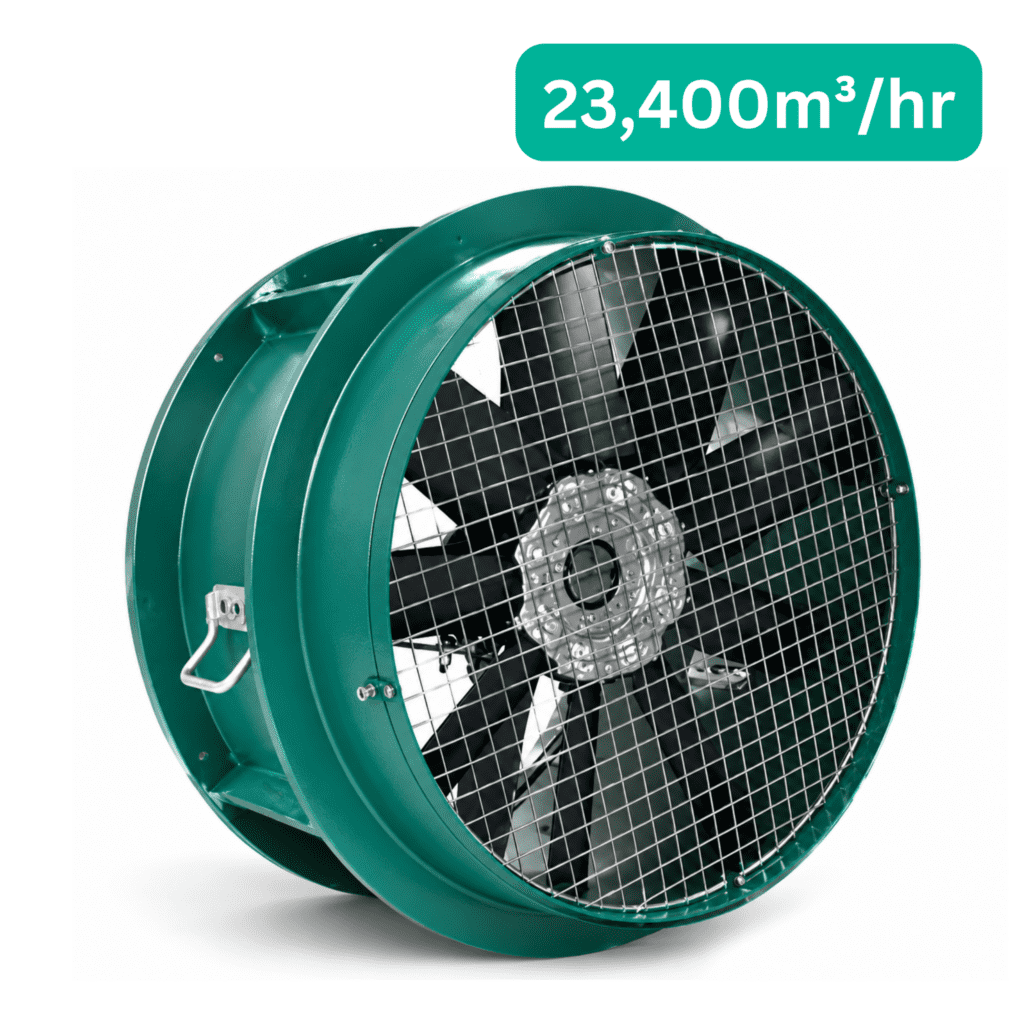
Selecting the right pneumatic fan depends on the size of the space you need to ventilate, the required airflow volume, the length of ducting run, whether it is being used for supply or exhaust duties, and any specific regulatory or compliance requirements for your site.
As a general guide, the 300mm Pneumatic Axial Fan suits smaller confined spaces and shorter duct runs where a compact and portable unit is the priority. The 500mm Pneumatic Axial Fan is the best option for underground mining and tunnelling where FRAS compliance is required and higher airflow is needed. The 600mm Pneumatic Axial Fan provides a larger diameter unit with strong airflow and long ducting capability for bigger excavations and infrastructure works.
Control Hire’s ventilation engineers can help you determine the right fan selection and configuration for your project. Whether you need a single unit for confined space entry or a multi fan ventilation system for a tunnel drive, the team can design a solution that meets your airflow requirements and keeps your workforce safe.
Get in Touch
To discuss pneumatic fan hire for your next project, contact Control Hire on (02) 9167 0234 (Sydney), (03) 9993 7149 (Melbourne) or (07) 2105 8298 (Brisbane). You can also request a quote online.